Ref
[1] https://leetcode.com/problems/largest-bst-subtree/
298. Binary Tree Longest Consecutive Sequence
Given a binary tree, find the length of the longest consecutive sequence path.
The path refers to any sequence of nodes from some starting node to any node in the tree along the parent-child connections. The longest consecutive path need to be from parent to child (cannot be the reverse).
Example 1:
Input: 1 \ 3 / \ 2 4 \ 5 Output:3Explanation: Longest consecutive sequence path is3-4-5, so return3.
Example 2:
Input: 2 \ 3 / 2 / 1 Output: 2 Explanation: Longest consecutive sequence path is2-3, not3-2-1, so return2.
1 2 3 4 5 6 7 8 9 10 11 12 13 14 15 16 17 18 19 20 21 22 23 24 25 26 27 28 29 30 31 32 33 34 35 36 37 38 39 40 41 42 43 44 45 46 47 48 49 50 51 52 53 54 55 56 57 58 59 60 61 62 63 64 65 66 67 68 69 70 71 72 73 74 75 76 77 78 79 80 81 82 83 84 85 86 87 88 89 90 91 92 93 94 95 96 97 98 99 100 101 102 103 104 105 106 107 108 109 110 111 112 113 | //C++: 40ms dfs recursive /** * Definition for a binary tree node. * struct TreeNode { * int val; * TreeNode *left; * TreeNode *right; * TreeNode(int x) : val(x), left(NULL), right(NULL) {} * }; */ class Solution { public: int longestConsecutive(TreeNode* root) { if(!root) return 0; int ret = 1; lc(root, ret, root->val, 1); return ret; } void lc(TreeNode* root, int &ret, int parent, int len){ if(!root) return; if(root->val == parent+1){ ret = max(ret, len+1); }else{ len = 0; } lc(root->left, ret, root->val, len+1); lc(root->right, ret, root->val, len+1); } }; //C++: 48ms dfs iterative /** * Definition for a binary tree node. * struct TreeNode { * int val; * TreeNode *left; * TreeNode *right; * TreeNode(int x) : val(x), left(NULL), right(NULL) {} * }; */ class Solution { public: int longestConsecutive(TreeNode* root) { if(!root) return 0; stack<pair<TreeNode*, int>> stk; stk.push(pair<TreeNode*, int>(root, 1)); int ret = 1; while(!stk.empty()){ TreeNode* t = stk.top().first; int cur = stk.top().second; stk.pop(); if(t->left){ if(t->left->val == t->val+1){ stk.push(pair<TreeNode*, int>(t->left, cur+1)); ret = max(ret, cur+1); }else{ stk.push(pair<TreeNode*, int>(t->left, 1)); } } if(t->right){ if(t->right->val == t->val+1){ stk.push(pair<TreeNode*, int>(t->right, cur+1)); ret = max(ret, cur+1); }else{ stk.push(pair<TreeNode*, int>(t->right, 1)); } } } return ret; } }; //C++: 44ms bfs iterative /** * Definition for a binary tree node. * struct TreeNode { * int val; * TreeNode *left; * TreeNode *right; * TreeNode(int x) : val(x), left(NULL), right(NULL) {} * }; */ class Solution { public: int longestConsecutive(TreeNode* root) { if(!root) return 0; queue<pair<TreeNode *, int>> que; que.push(pair<TreeNode *, int>(root, 1)); int ret = 1; while(!que.empty()){ TreeNode * t = que.front().first; int cur = que.front().second; que.pop(); if(t->left){ if(t->left->val == t->val+1){ ret = max(ret, cur+1); que.push(pair<TreeNode *, int>(t->left, cur+1)); }else{ que.push(pair<TreeNode *, int>(t->left, 1)); } } if(t->right){ if(t->right->val == t->val+1){ ret = max(ret, cur+1); que.push(pair<TreeNode *, int>(t->right, cur+1)); }else{ que.push(pair<TreeNode *, int>(t->right, 1)); } } } return ret; } }; |
Serialization is the process of converting a data structure or object into a sequence of bits so that it can be stored in a file or memory buffer, or transmitted across a network connection link to be reconstructed later in the same or another computer environment.
Design an algorithm to serialize and deserialize a binary tree. There is no restriction on how your serialization/deserialization algorithm should work. You just need to ensure that a binary tree can be serialized to a string and this string can be deserialized to the original tree structure.
Clarification: The input/output format is the same as how LeetCode serializes a binary tree. You do not necessarily need to follow this format, so please be creative and come up with different approaches yourself.
Example 1:
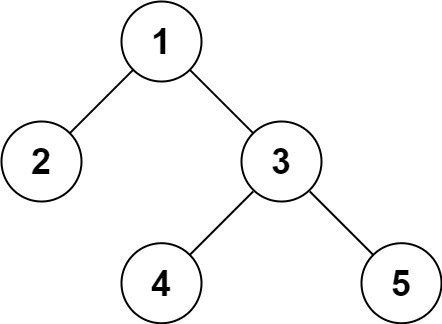
Input: root = [1,2,3,null,null,4,5]
Output: [1,2,3,null,null,4,5]
Example 2:
Input: root = []
Output: []
Example 3:
Input: root = [1]
Output: [1]
Example 4:
Input: root = [1,2]
Output: [1,2]
Constraints:
[0, 104].-1000 <= Node.val <= 10001 2 3 4 5 6 7 8 9 10 11 12 13 14 15 16 17 18 19 20 21 22 23 24 25 26 27 28 29 30 31 32 33 34 35 36 37 38 39 40 41 42 43 44 45 46 47 48 49 50 51 52 53 54 55 56 | /** * Definition for a binary tree node. * struct TreeNode { * int val; * TreeNode *left; * TreeNode *right; * TreeNode(int x) : val(x), left(NULL), right(NULL) {} * }; */ class Codec { void serialize(TreeNode* node, stringstream &ss){ if(!node) { ss<<"# "; } else { ss<<node->val<<" "; serialize(node->left, ss); serialize(node->right, ss); } } TreeNode* deserialize(stringstream &ss) { string s; ss>>s; if(s=="#"){ return NULL; }else{ TreeNode* node = new TreeNode(stoi(s)); node->left = deserialize(ss); node->right = deserialize(ss); return node; } } public: // Encodes a tree to a single string. string serialize(TreeNode* root) { stringstream ss; serialize(root, ss); return ss.str(); } // Decodes your encoded data to tree. TreeNode* deserialize(string data) { stringstream ss; ss<<data; return deserialize(ss); } }; // Your Codec object will be instantiated and called as such: // Codec codec; // codec.deserialize(codec.serialize(root)); |
1 2 3 4 5 6 7 8 9 10 11 12 13 14 15 16 17 18 19 20 21 22 23 24 25 26 27 28 29 30 31 32 33 34 35 36 37 38 39 40 41 42 43 44 45 46 47 48 49 50 51 52 53 54 55 56 | /** * Definition for a binary tree node. * public class TreeNode { * int val; * TreeNode left; * TreeNode right; * TreeNode(int x) { val = x; } * } */ public class Codec { String str; String[] strs; int index = 0; // Encodes a tree to a single string. public String serialize(TreeNode root) { str = ""; sh(root); return str; } void sh(TreeNode node){ if(str.length()>0) str += ","; if(node==null){ str += "#"; }else{ str += node.val; sh(node.left); sh(node.right); } } // Decodes your encoded data to tree. public TreeNode deserialize(String data) { strs = data.split(","); index = 0; return dh(); } TreeNode dh(){ TreeNode node; String s = strs[index++]; if(s.equals("#")){ node = null; }else{ node = new TreeNode(Integer.parseInt(s)); node.left = dh(); node.right = dh(); } return node; } } // Your Codec object will be instantiated and called as such: // Codec ser = new Codec(); // Codec deser = new Codec(); // TreeNode ans = deser.deserialize(ser.serialize(root)); |
270. Closest Binary Search Tree Value
Given the root of a binary search tree and a target value, return the value in the BST that is closest to the target.
Example 1:
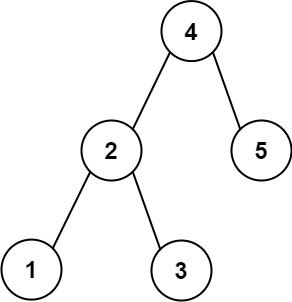
Input: root = [4,2,5,1,3], target = 3.714286
Output: 4
Example 2:
Input: root = [1], target = 4.428571
Output: 1
Constraints:
[1, 104].0 <= Node.val <= 109-109 <= target <= 1091 2 3 4 5 6 7 8 9 10 11 12 13 14 15 16 17 18 19 20 21 22 23 24 25 26 27 28 29 30 31 | /** * Definition for a binary tree node. * public class TreeNode { * int val; * TreeNode left; * TreeNode right; * TreeNode() {} * TreeNode(int val) { this.val = val; } * TreeNode(int val, TreeNode left, TreeNode right) { * this.val = val; * this.left = left; * this.right = right; * } * } */ class Solution { int value = -1; public int closestValue(TreeNode root, double target) { helper(root, target); return value; } void helper(TreeNode node, double target){ if(node==null) return; if(value == -1 || Math.abs(value-target)>Math.abs(node.val-target)){ value = node.val; } if(target<node.val) helper(node.left, target); if(target>node.val) helper(node.right, target); } } |
250. Count Univalue Subtrees
Given the root of a binary tree, return the number of uni-value subtrees.
A uni-value subtree means all nodes of the subtree have the same value.
Example 1:
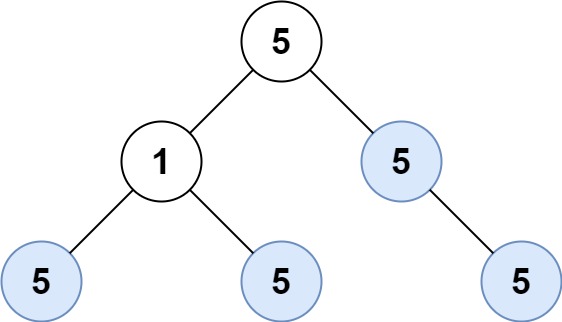
Input: root = [5,1,5,5,5,null,5] Output: 4
Example 2:
Input: root = [] Output: 0
Example 3:
Input: root = [5,5,5,5,5,null,5] Output: 6
Constraints:
[0, 1000].-1000 <= Node.val <= 10001 2 3 4 5 6 7 8 9 10 11 12 13 14 15 16 17 18 19 20 21 22 23 24 25 26 27 28 | //C++: 4ms /** * Definition for a binary tree node. * struct TreeNode { * int val; * TreeNode *left; * TreeNode *right; * TreeNode(int x) : val(x), left(NULL), right(NULL) {} * }; */ class Solution { public: int countUnivalSubtrees(TreeNode* root) { int cnt = 0; helper(root, cnt); return cnt; } bool helper(TreeNode* root, int &cnt){ if(!root) return true; bool left = helper(root->left, cnt); bool right = helper(root->right, cnt); if(!left || !right) return false; if(root->left && root->left->val!=root->val) return false; if(root->right && root->right->val!=root->val) return false; cnt++; return true; } }; |
1 2 3 4 5 6 7 8 9 10 11 12 13 14 15 16 17 18 19 20 21 22 23 24 25 26 27 28 29 30 31 32 33 34 35 | /** * Definition for a binary tree node. * public class TreeNode { * int val; * TreeNode left; * TreeNode right; * TreeNode() {} * TreeNode(int val) { this.val = val; } * TreeNode(int val, TreeNode left, TreeNode right) { * this.val = val; * this.left = left; * this.right = right; * } * } */ class Solution { int ret = 0; public int countUnivalSubtrees(TreeNode root) { isUni(root); return ret; } boolean isUni(TreeNode root){ if (root==null) return true; boolean left = isUni(root.left); boolean right = isUni(root.right); int v = root.val; if(!left || !right) return false; if(root.left!=null && root.left.val!=v) return false; if(root.right!=null && root.right.val!=v) return false; ret ++; return true; } } |
